A lot of industrial job seekers look at one number first: the hourly wage. That makes sense, but it is only the beginning of the story. In the federal wage data, production occupations had a median annual wage of $51,600 in May 2025, while first-line supervisors of production and operating workers were at $76,600, machinists at $58,750, and industrial machinery mechanics at $64,100. Those gaps are a reminder that industrial work is not one market and that a job title, a shift, and a growth path can matter as much as the starting rate.
The wage tells you what you earn today
A pay rate is real and important. It affects rent, gas, child care, and whether a commute is worth taking. But a single wage number does not tell you what kind of work you are really stepping into. In industrial settings, the difference between a decent short-term paycheck and a good long-term job often comes down to whether the role builds useful skills, gives you access to better equipment or responsibilities, and leads somewhere else. The same broad occupation can pay differently by employer type, plant type, and level of autonomy, which is why the federal tables are better at comparison than prediction.
That is why a candidate should ask a second question after hearing the rate: what happens after week one? If the answer is nothing, the job may still be fine. But it is a different kind of opportunity than a role that adds training, new authorizations, and wage progression over time.
Training is not the same as authorization
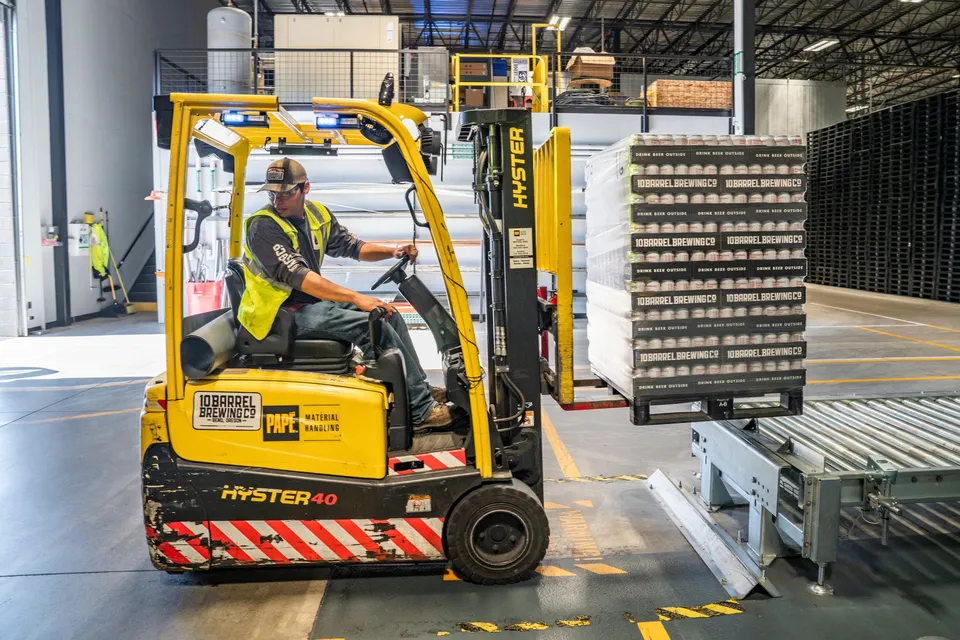
One of the biggest mistakes in industrial hiring is treating experience as if it automatically equals permission to do the work. OSHA’s powered industrial truck rules are a good example. Before a worker operates a forklift or similar truck, the employer must provide training and evaluate the operator, and that evaluation has to be repeated at least every three years and after refresher training. In other words, a worker may have warehouse experience and still not be cleared for the specific truck, load type, or site hazards in front of them.
That distinction matters because industrial jobs are full of equipment-specific and site-specific differences. A person may know how to move material safely in one building and still need a fresh evaluation in another. The same is true across many roles: a machine operator, a quality inspector, and a maintenance technician may all work on the same floor, but they do not carry the same permissions or the same risk exposure.
For employers, that means the hiring conversation should not stop at “have you done this before?” It should move to “what equipment, what materials, what shift, and what clearance?” For job seekers, it means the most valuable experience is the kind that is documented, repeatable, and recognized on the site where you work next.
Temporary work, direct hire, and apprenticeship are different paths
Industrial jobs can come through direct hire, temporary staffing, or apprenticeship, and those arrangements do not work the same way. OSHA says staffing agencies and host employers share responsibility for training and safety, and the host employer is often best positioned to handle site-specific hazards. That means a temporary assignment can be a solid entry point, but it should still come with clear rules about who trains, who supervises, and who signs off on the work.
Apprenticeship is different again. Apprenticeship.gov describes registered apprenticeship as paid work experience with a mentor, classroom instruction tied to the job, progressive wage increases, and a credential that can travel with the worker. That makes apprenticeship one of the clearest examples of a job that is more than a paycheck. It is a pathway. Not every industrial role is an apprenticeship occupation, and not every worker wants that route, but the model is useful because it makes growth visible instead of vague.
What a strong industrial offer should make clear
Whether you are hiring or applying, a good industrial offer should answer five practical questions:
- What exactly will I do on day one?
- What training comes with the role?
- What equipment or tasks require separate authorization?
- How do shifts, overtime, and weekends work?
- What is the next step if I do well?
If an employer can answer those questions, the offer is easier to trust. If a candidate can ask them early, the job is easier to judge. That is especially important in industrial work because the same title can hide very different levels of setup, operation, troubleshooting, maintenance, and supervision. The word “machinist,” for example, may cover a very different mix of work than “assembler” or “maintenance mechanic,” and the pay should reflect that difference.
The best question is not “What does it pay?”
The better question is: what does this job let me become? A fair rate matters, but a fair rate with no training, no advancement, and no clear authorization can stall out fast. On the other hand, a job that starts modestly but adds skill, responsibility, and a recognized next step can become much more valuable over time. That is why industrial workers should compare the whole package: starting pay, shift structure, training access, equipment authorization, and the chance to progress.
Employers can improve their own results by making that same package visible in the posting, the interview, and the first week on site. Job seekers can protect themselves by asking what the role teaches, not just what it pays. In industrial work, the best offers do both. They compensate today’s labor and open tomorrow’s options.