A resume can tell you that someone worked in a warehouse, ran a machine, or supported a production line. It cannot tell you whether that person is already cleared to do the next job on your floor. In industrial work, that difference matters because the labor market is not one broad category: in May 2025, U.S. production occupations totaled 8.57 million jobs, with a median annual wage of $51,600, while first-line supervisors of production and operating workers were at $76,600. The gap is a clue that coordination, training, and accountability are different work, not just a fancier title.
The most useful question is not, “Has this person done industrial work before?” It is, “What parts of the work travel cleanly from one site to another, and what parts have to be earned again on site?” A person may bring pace, attendance, shop-floor communication, basic measurement habits, or a comfort with physical work. But equipment authorization is not the same as general experience. OSHA’s powered industrial truck rule requires employer training and evaluation before operation, and the evaluation has to be repeated at least every three years and after refresher training. In other words, a worker may be familiar with forklifts in general and still not be cleared for your truck, your load pattern, or your aisle conditions.
That distinction gets clearer when you separate the major industrial role families. Assemblers and fabricators do repeatable build work. Machinists set up and operate machine tools for precision parts and may also program equipment. Maintenance technicians, millwrights, and industrial machinery mechanics diagnose malfunctions, perform preventive maintenance, and often combine mechanical, electrical, welding, and alignment work. Quality control inspectors check products and materials against specifications. Leads and first-line supervisors plan schedules, train workers, inspect materials and equipment, and solve attendance or production problems. Those jobs overlap, but they are not interchangeable.
That is why the production environment matters as much as the job title. A job shop usually asks for more flexibility, blueprint reading, setup changes, and precision because the product mix changes often. A repetitive line or cell puts more weight on pace, standard work, and handoffs. In regulated or process-style work, sanitation, contamination control, temperature, and disciplined procedure can matter as much as speed. A candidate who has done well in one environment may transfer well, but the employer still has to ask which part of the work was actually being performed and which part was being managed by someone else.
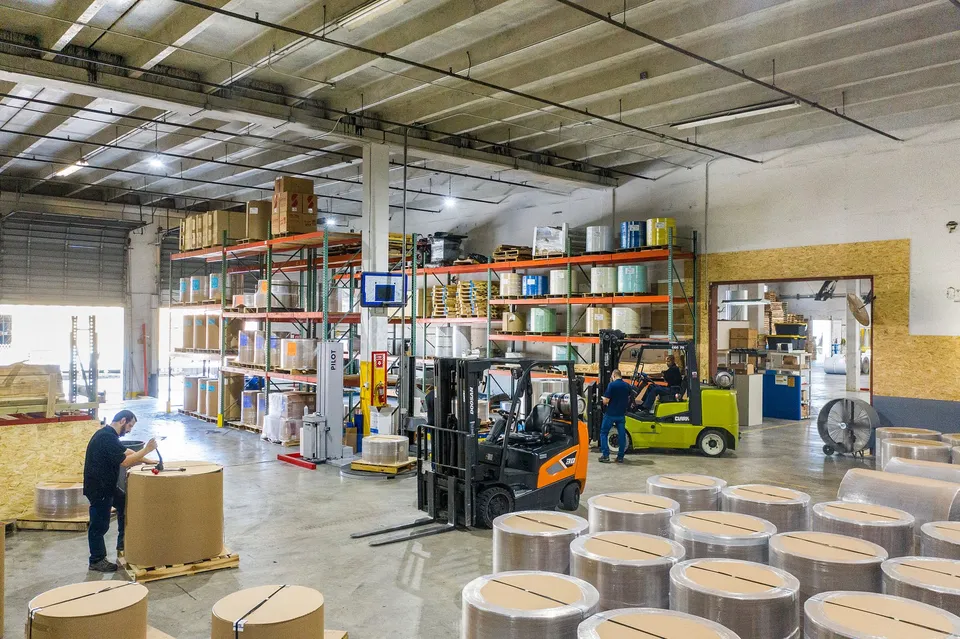
Temporary staffing adds another layer. OSHA says staffing agencies and host employers share responsibility for training temporary workers, hazard communication, and recordkeeping, and it stresses that site-specific training often belongs with the host because the host controls the workplace hazards. That matters in industrial settings because a worker can be useful for one task and still not be ready for another. The practical result is simple: if a facility treats temporary help as fully interchangeable with permanent help, it is usually skipping the step where site knowledge becomes real authorization.
Employee experience is part of this same conversation. Industrial work is physical, repetitive, and often shift-based, so fatigue and ergonomics are not side issues. NIOSH says fatigue is common with night shifts and extended work hours, and it can slow reaction time, reduce attention, and impair judgment. NIOSH also defines ergonomics as designing work to fit worker capabilities and links musculoskeletal problems to forceful exertion, repetition, lifting, vibration, and awkward postures. That means soreness, tiredness, and missed details are often work-design issues, not personal failings. Good supervisors treat them as signals that the schedule, tools, or task rotation needs attention.
For workers, this is where career growth becomes real. Not every industrial path starts with a formal apprenticeship, but apprenticeship is a useful model because it combines paid work, a mentor, classroom instruction, progressive wage increases, and a portable credential. Apprenticeship.gov says the length varies by employer, occupation complexity, industry, and program type. Even when a plant does not sponsor registered apprenticeship, it can still borrow the same logic by making skill growth visible, documenting what a worker has already mastered, and tying advancement to new responsibilities rather than to time served alone.
Pay also makes more sense when the work is broken into pieces. In May 2025, machinists had a median annual wage of $58,750, industrial machinery mechanics, machinery maintenance workers, and millwrights were at $64,100, and HVAC/R mechanics and installers were at $61,010. Assemblers and fabricators were lower, at $47,740, while first-line supervisors were higher, at $76,600. The point is not that one job is better than another. The point is that industrial pay reflects how much setup, judgment, troubleshooting, and coordination the role really carries. A title alone cannot show that.
For employers, the practical move is to write and screen for the actual transition from “can help” to “can do independently.” Ask what machines were run, what materials were handled, what tolerances were met, what quality checks were used, and what was still supervised. For applicants, the best move is to describe the work you were trusted to do on your last floor, not just the job title on the badge. If you are comparing a role or planning your next step, review the employer resources at industrialstaffingmn.com/employers.html and the job-seeker resources at industrialstaffingmn.com/job-seekers.html, or call 218-WorkNow or email the office.