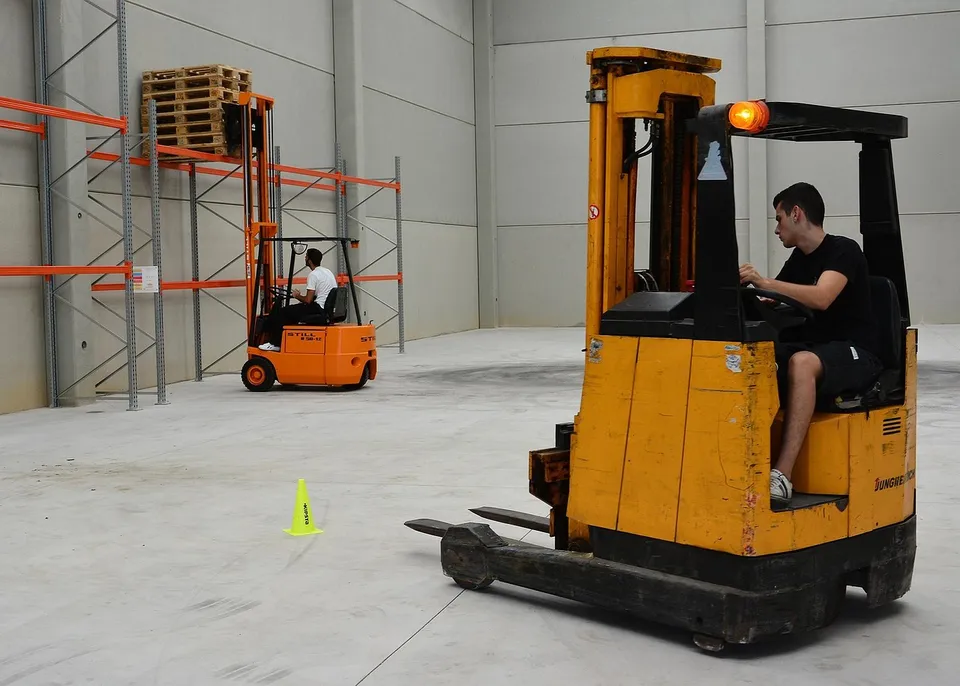
Industrial employers and job seekers often use the same word—experienced—but in practice industrial work splits into two separate questions: Can the person do the task, and is the person cleared to do it here? A warehouse worker may know how to move freight, but OSHA’s powered industrial truck standards still require employer training and evaluation before operation, and that evaluation must be repeated at least every three years and after refresher training. In other words, prior exposure is helpful, but it is not the same thing as site-specific authorization.
That distinction matters because industrial jobs are not interchangeable. Assemblers and fabricators handle repeatable build work; machinists set up and operate machine tools and may also program equipment; maintenance technicians, millwrights, and industrial machinery mechanics work across diagnosis, alignment, installation, welding, machining, pipe fitting, and HVAC-related tasks; quality control inspectors examine products against specifications; and leads and supervisors plan schedules, train workers, and coordinate production. Those role families overlap, but they are not the same job. A posting that collapses them into one title leaves both employers and applicants guessing about the real work.
A useful way to read an industrial resume is to separate three layers. First is base skill: can the person run a machine, inspect a part, or move material? Second is task depth: can the person set up, troubleshoot, or maintain the equipment instead of simply operating it? Third is authorization: has the employer trained and evaluated the worker for this exact site, this exact truck, or this exact process? OSHA’s forklift guidance makes the point plainly, and it is easy to apply more broadly. A worker may bring real experience, but the employer still has to decide what transfers and what must be taught on site.
That is why title matching alone can mislead. “Machinist” may mean production machining, tool-room work, maintenance machining, or CNC setup, and each version carries different tolerances, tooling, and judgment. “Maintenance” may mean one craft or several. “Inspector” may mean line-side checks, final inspection, or incoming-material review. The federal role descriptions show those differences clearly, and they explain why a candidate who was strong in one plant may need real ramp-up time in another. A good hiring conversation asks what machines were run, what materials were handled, what tolerances were held, and what problems the worker was trusted to solve.
Pay also reflects those layers. In May 2025, production occupations had a median annual wage of $51,600, first-line supervisors of production and operating workers were at $76,600, assemblers and fabricators were at $47,740, machinists at $58,750, industrial machinery mechanics at $64,100, and HVAC/R mechanics and installers at $61,010. Those differences help explain why employers should not treat all industrial openings as one broad labor pool and why applicants should not compare two roles only by headline title. The job with more setup, more troubleshooting, or more responsibility usually carries different pay and different expectations.
The worker experience changes as schedules change. Quality control inspectors often work full time, and some work evenings, overnight, or weekend shifts; shift assignment may depend on seniority. That matters because NIOSH notes that fatigue is commonly associated with night shifts and extended work hours, and it can slow reaction time, reduce attention and memory, and impair judgment. NIOSH also explains that ergonomics is the design of work to fit worker capabilities, and that musculoskeletal strain can come from forceful exertion, repetition, lifting, vibration, and awkward postures. For industrial employees, that means schedule, workload, and lifting demands are not side issues—they are part of whether the job is sustainable.
For employers, the practical lesson is to write the job around the real work instead of around a familiar label. If the role needs machine setup, say so. If it requires troubleshooting, say so. If it needs forklift authorization, note that the worker must be trained and evaluated on your equipment and your site. If the role includes night work, rotating shifts, or heavy material handling, say that plainly as well. Clearer job definitions reduce turnover because they let the right people self-select before anyone wastes time on a mismatch. They also support safer onboarding because the employer can assign training to the exact hazards the worker will face. OSHA’s temporary-worker guidance reinforces that staffing agencies and host employers share responsibility for training, hazard communication, and recordkeeping.
For applicants, the same clarity is an advantage. A strong industrial career move is not always the highest posted wage; it is often the job that combines pay, shift, commute, training, and advancement in a way that fits real life. The Census Bureau’s 2024 commuting data show a mean one-way commute of 27.2 minutes and 9.3 percent of workers commuting 60 minutes or more, which is a reminder that industrial work is usually a physical-location decision, not a remote one. If a job also requires nights, overtime, or a longer drive, the whole package deserves attention.
There is a hopeful side to this structure. Industrial work often includes real advancement paths, not just lateral job changes. Apprenticeship.gov describes registered apprenticeship as paid work experience with a mentor, classroom instruction, progressive wage increases, and a nationally recognized credential. That model shows what many workers want from industrial careers: visible growth, not vague promises. Even when a plant is not a registered apprenticeship sponsor, it can borrow the same logic by showing how an assembler becomes an inspector, how an operator earns machine authorization, or how a maintenance helper moves toward a full technician role.
The smartest industrial hiring conversations are therefore not about whether someone is “experienced enough” in the abstract. They are about which parts of the job can be learned quickly, which parts require site-specific clearance, and which parts deserve formal progression over time. Employers get safer coverage and fewer mismatches. Applicants get a clearer path into work that fits their skills and their schedule. If you are reviewing a posting or shaping one, start by separating the tasks, the authorization, and the shift before you decide whether the job is actually the right one. A good next step is to compare a role against the employer page or the job-seeker page and make those differences explicit before anyone starts.